The Country Issuing the Passport
An archipelago of some eighty islands, a member of the United Nations and the Commonwealth, with an economy built on services and agriculture.
Vanuatu. An island nation scattered across the South Pacific, east of Australia, west of Fiji, and just north of New Caledonia. It’s a place renowned for raw natural beauty—83 volcanic islands—a vibrant Melanesian culture, and one of the most linguistically diverse spots on Earth.
This article isn't just a list of facts. We'll explore the geography, people, government, economy, and unique cultural fabric of Vanuatu, giving you a real feel for this remarkable country in 2026.
Where in the World is Vanuatu Located?
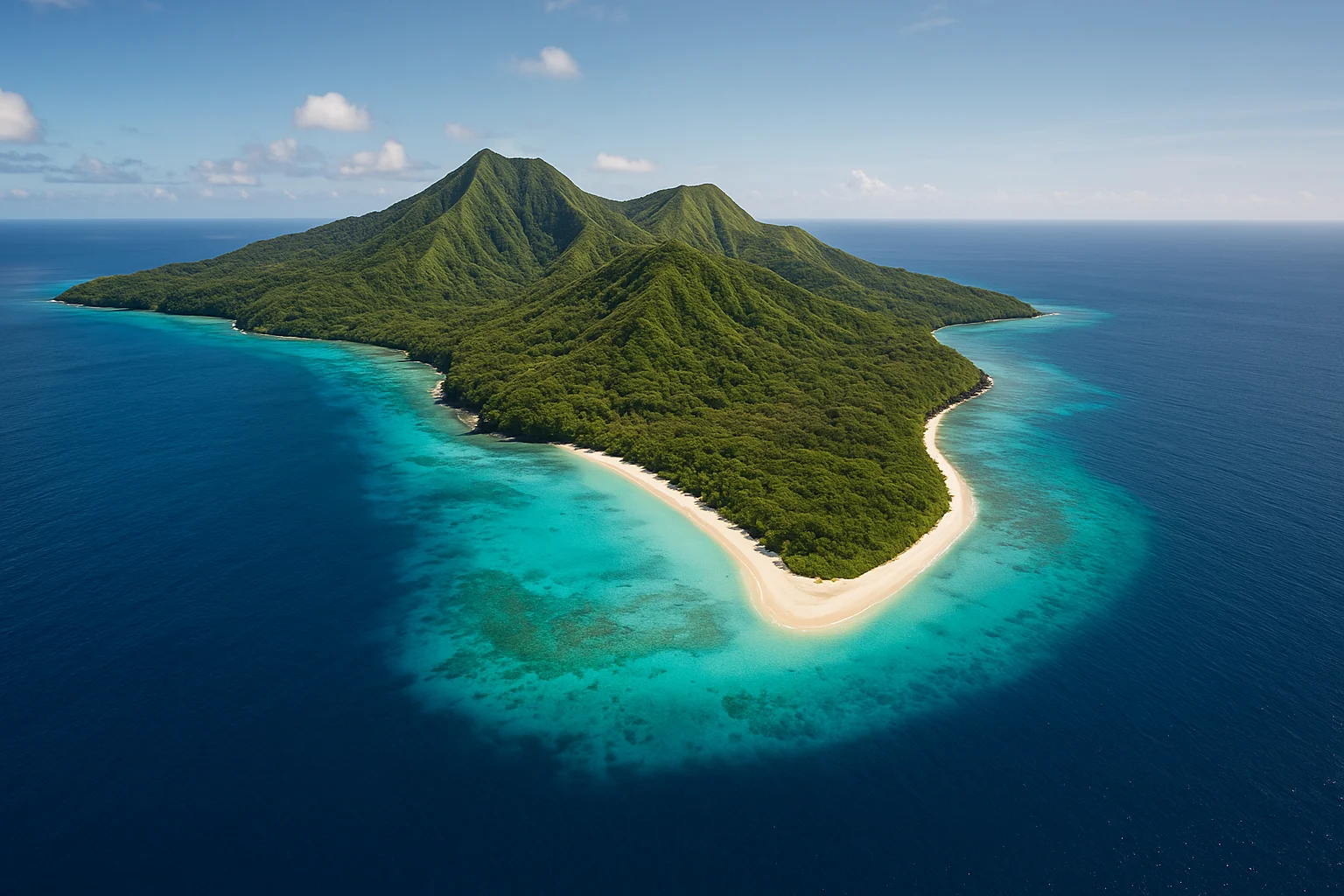
Vanuatu is an archipelago of 83 volcanic islands. A Y-shaped chain. Its total land area is 12,189 square kilometers, but its vast 2,528 km coastline hints at the nation's deep connection to the sea. It lies in the Melanesian subregion of Oceania.
Geographically, this places it in the South Pacific, about 1,750 kilometers east of northern Australia. The nation sits between the Solomon Islands to the north, Fiji to the east, and the French territory of New Caledonia to the southwest. This location puts Vanuatu squarely on the Pacific Ring of Fire, a major area of seismic and volcanic activity. For residents, this isn't an abstract fact; it's a daily reality of minor earth tremors and a constant, low-level risk of eruptions that shapes everything from building codes to disaster preparedness.
Those volcanic origins dominate the topography, creating rugged mountains that plunge into narrow coastal plains. The main islands include Espiritu Santo, the largest and home to Vanuatu's highest point, Mount Tabwemasana, at 1,877 meters. You also have Malekula, celebrated for its cultural diversity, and Efate, which hosts the nation's capital, Port Vila. The climate is tropical. A hot, rainy season runs from November to April, which is also the official cyclone season—a critical detail for travelers, as a major storm can shut down the country for days. A cooler, drier season from May to October, moderated by southeast trade winds, is generally considered the best time to visit. This environment supports an incredible biodiversity, with world-famous coral reefs and dense rainforests covering many of the islands.
About vanuatu country map
A map of Vanuatu reveals the nation's distinct Y-shaped archipelago scattered across the South Pacific. You can clearly see the main island groups, with the largest islands of Espiritu Santo and Malekula forming the two northern arms of the 'Y'. Further south sits Efate, where the capital Port Vila is strategically located. More than anything, a map highlights the sheer vastness of the ocean separating the islands and the nation's isolation, underscoring its unique identity.
Vanuatu where is it in the world
Globally, Vanuatu is positioned in Oceania, within the cultural and geographic subregion of Melanesia. The name means "islands of black people," and the region also includes Fiji, the Solomon Islands, Papua New Guinea, and New Caledonia. To give that some context, Oceania is often divided into three parts: Melanesia, Polynesia, and Micronesia. The Pacific Islands region as a whole includes 14 sovereign countries, and Vanuatu is a key member of this community, actively participating in regional bodies like the Pacific Islands Forum.
What is the Culture and Society of Vanuatu Like?
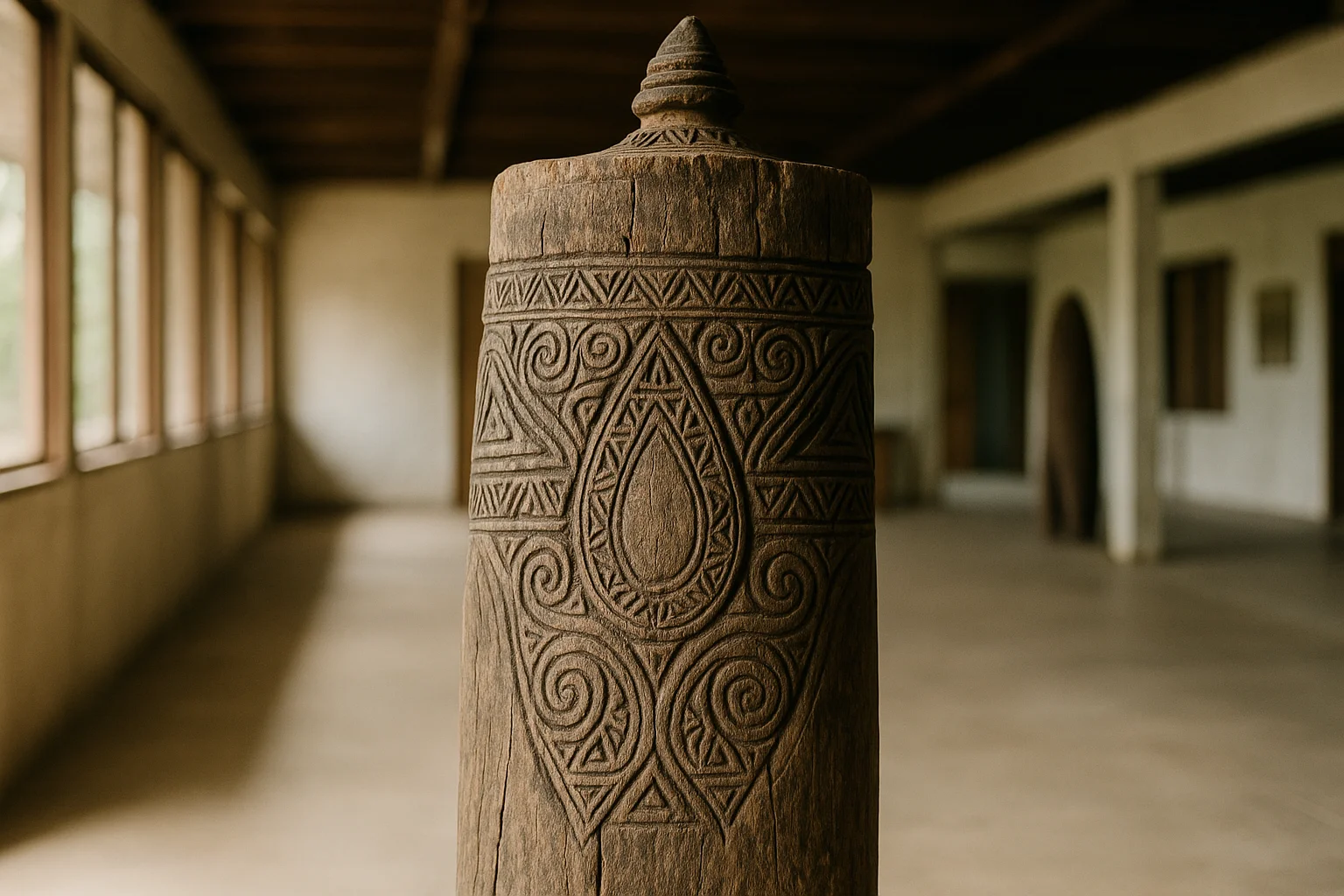
The culture of Vanuatu is defined by deep Melanesian roots. Over 98% of the population is indigenous ni-Vanuatu. This heritage breathes life into an extraordinary diversity of local customs, traditions, and languages, all bound together by the concept of kastom.
Most people live in rural villages. Here, life revolves around subsistence agriculture and traditional ways, a stark contrast to the more modern, urban centers of Port Vila and Luganville. The nation has a very young demographic, with a huge portion of the population under 25. This youth bulge presents both immense potential and significant development challenges.
But perhaps the most remarkable aspect of Vanuatu's society is its linguistic diversity. It is one of the world's most linguistically dense countries. Over 100 distinct indigenous languages are spoken across its 83 islands. This incredible variety is a living testament to the historical isolation of different island communities. To bridge this gap, the nation adopted Bislama, a pidgin English creole, as its national language. For any visitor, learning a few phrases in Bislama (like "Halo" for hello or "Tangkyu tumas" for thank you very much) is the single most effective way to connect with people anywhere in the country. English and French serve as the other two official languages, a direct legacy of the country's unique colonial history under the Anglo-French Condominium.
Vanuatu population
As of 2026, the estimated population of Vanuatu is over 330,000 people. With a relatively high growth rate, the inhabitants are spread across roughly 65 of the nation's 83 islands. The most densely populated are Efate, Espiritu Santo, and Malekula. While the main urban centers of Port Vila (on Efate) and Luganville (on Espiritu Santo) are growing, the country remains overwhelmingly rural.
Vanuatu language
Vanuatu's linguistic landscape is fascinating. It has three official languages: Bislama, English, and French. Bislama is the true lingua franca, a common tongue that unites the various linguistic groups and is spoken by almost everyone. English and French are the languages of government, business, and higher education, reflecting the dual colonial influence. Beyond these, the 100-plus indigenous languages give Vanuatu the highest concentration of languages per capita in the world. This linguistic tapestry is a cornerstone of cultural identity for communities across the archipelago.
About vanuatu country for kids
For young learners, Vanuatu is a land of incredible adventure. It's a country with real, active volcanoes that you can safely visit and see glowing lava at night! People here speak over 100 different languages, so a short boat ride can take you to an island where they use a completely different language. Instead of just one main type of food, ni-Vanuatu eat delicious tropical fruits, root vegetables like yams from their gardens, and lots of fresh fish from the sea. A really cool fact: before it became its own country, Vanuatu was ruled by two other countries, Great Britain and France, at the exact same time!
How is Vanuatu Governed?
Vanuatu is a sovereign democratic republic. Its governance rests on its Constitution, the supreme law of the country as established in Article 2. The system of government is a parliamentary republic with a clear separation of powers.
The state structure includes a President, who is the Head of State, and a Prime Minister, who is the Head of Government. The Prime Minister, a figure like Charlot Salwai, leads the Council of Ministers (the cabinet) and is responsible to the Parliament. The legislative branch is the unicameral Parliament of Vanuatu, composed of 52 members elected for four-year terms. Under Article 16(1) of the Constitution, Parliament is empowered to make laws for the "peace, order, and good government of Vanuatu." Political life is often dynamic. Coalition governments are common, and no-confidence motions are a frequently used tool for political change. For businesses and investors, this means that government policy can sometimes shift unexpectedly, making long-term planning a challenge.
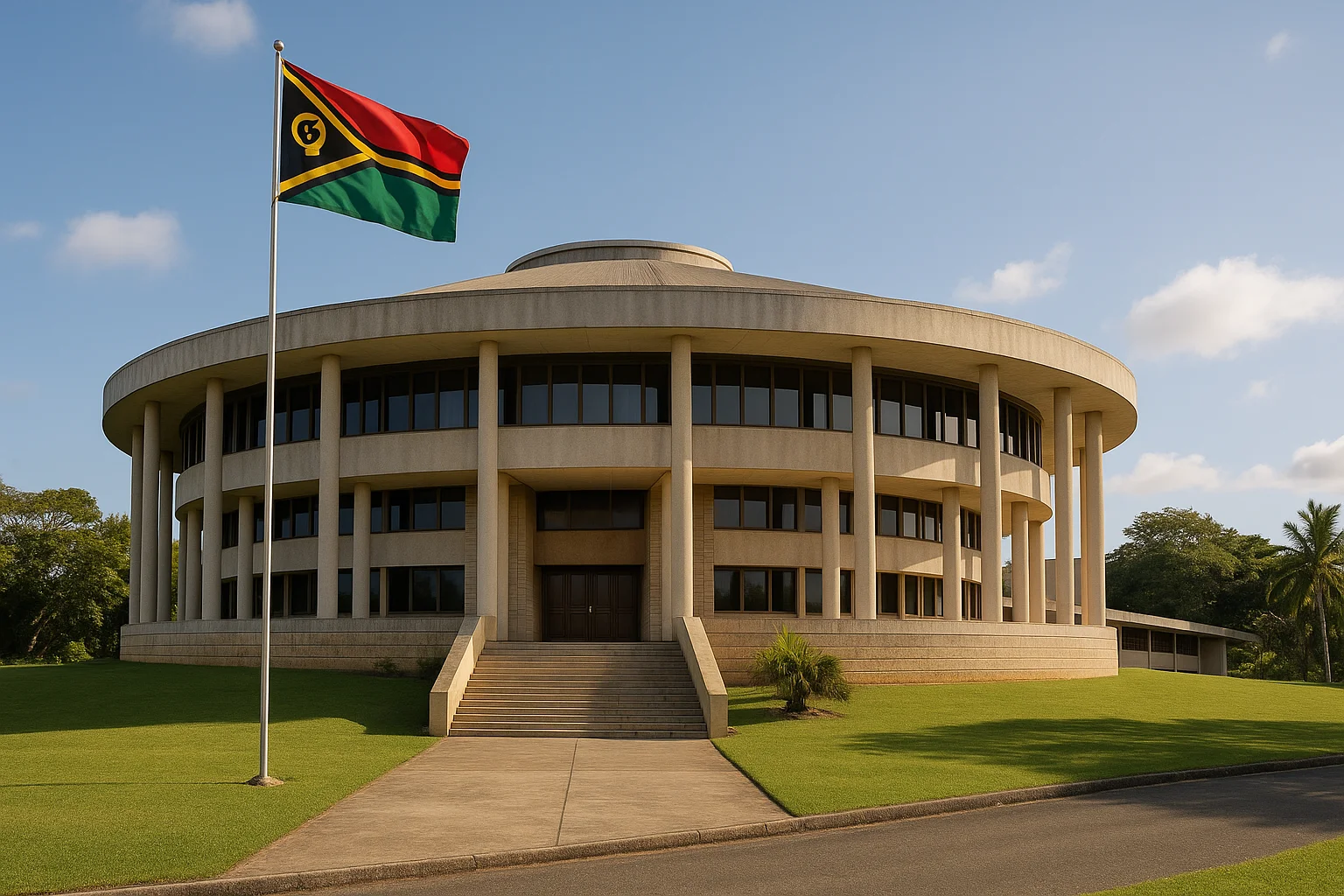
The judiciary is independent, with the Supreme Court holding unlimited jurisdiction to hear and determine civil and criminal proceedings. The 2019 case of Saemon v Tallis powerfully reinforced the central role of the judiciary and the Constitution. A unique feature of Vanuatu's legal system, however, is its recognition of custom law, or kastom. Courts are empowered to apply principles of custom where no formal law exists, attempting to blend traditional justice with inherited common and civil law traditions.
This blend of legal systems is a direct result of Vanuatu's unique past. From 1906 until independence in 1980, the islands, then known as the New Hebrides, were jointly governed by Britain and France in the Anglo-French Condominium. This dual administration created parallel English and French systems, whose remnants are still visible today in the nation's laws, official languages, and educational systems.
What Drives the Economy of Vanuatu?
Vanuatu's economy rests on three main pillars: agriculture, tourism, and offshore financial services. For a significant portion of the population, especially in rural areas, subsistence farming remains the bedrock of daily life and the informal or "kastom" economy.
Key Economic Sectors
- Agriculture: The main livelihood for over three-quarters of the population is small-scale farming. This sector not only ensures food security but also provides key exports. One important cash crop is kava, a traditional root used to make a ceremonial drink, which has a growing international market. Other major exports include copra (dried coconut meat), high-quality beef, cocoa, and timber.
- Tourism: Before global travel disruptions, tourism was the country's single largest source of foreign exchange. The draw is obvious: stunning natural beauty, from pristine beaches and vibrant coral reefs to accessible active volcanoes. Key attractions include scuba diving on the famous SS President Coolidge wreck off Espiritu Santo, witnessing the raw power of the Mt. Yasur volcano on Tanna, and experiencing authentic Melanesian culture in village tours.
- Financial Services: For decades, Vanuatu has operated as an offshore financial center, offering a low-tax environment. While this sector contributes to government revenue, it has faced increasing international pressure to improve transparency and regulatory standards.
Classified as a developing country, the nation faces significant economic hurdles. Its small, open economy is highly vulnerable to external shocks. These include swings in global commodity prices, economic downturns in key tourist markets like Australia and New Zealand, and the devastating impacts of natural disasters, particularly tropical cyclones.
Is Vanuatu a rich or poor country?
By global metrics like GDP per capita, Vanuatu is a developing or lower-middle-income country. Monetary poverty exists, especially in urban areas. This classification, however, doesn't tell the whole story. The concept of "richness" looks very different through the lens of the traditional kastom economy, where wealth is measured in social relationships, land, and community support—not cash. Many people live a sustainable, self-sufficient lifestyle through subsistence agriculture that provides for their needs, even if it's not monetized.
Is Vanuatu expensive?
The cost of visiting or living in Vanuatu is a tale of two worlds. For tourists, it can feel moderately expensive, similar to other South Pacific destinations like Fiji. Resorts, organized tours, and imported goods (food, wine, fuel) carry a high price tag due to import duties and transport costs. A meal at a resort in Port Vila will cost significantly more than one at a local market.
For locals and long-term residents, the cost of living varies dramatically. Life can be very affordable if you rely on local produce from the bustling markets. A lifestyle dependent on imported goods, however, is costly. Rent in Port Vila is much higher than in rural areas, where many people live in traditional housing on family land. Whether Vanuatu is "expensive" really depends on one's lifestyle and what one chooses to consume.
What Makes Vanuatu an Unforgettable Tourist Destination?
Vanuatu’s appeal isn't for every tourist. It’s built on the three pillars of raw adventure, deep culture, and staggering natural beauty. The experiences here are profound. This is a destination for those seeking authentic encounters over polished, mass-market tourism.
Adventure Tourism
Vanuatu is a playground for the bold. The most famous draw is Mt. Yasur on Tanna Island, one of the world's most accessible active volcanoes. Visitors can stand on the crater rim and witness fiery explosions of lava—a visceral experience you feel in your chest. However, this accessibility isn't a theme park guarantee; tour access depends entirely on the volcano's daily activity level, so your trip could be cancelled on short notice. Espiritu Santo offers world-renowned diving, anchored by the SS President Coolidge, a massive and explorable WWII troopship wreck. Nearby lies Million Dollar Point, where the US military unceremoniously dumped its equipment after the war. Beyond diving, the islands dare you to try canyoning expeditions, jungle treks to secluded waterfalls, and exploring the iconic "blue holes," which are pristine freshwater swimming spots that look almost impossibly blue.
Cultural Immersion
A trip here offers a rare window into authentic Melanesian life. You can stay in traditional villages, learn about kastom (customary ways) from local chiefs, and witness ancient ceremonies. Nothing compares to the Naghol, or land diving, on Pentecost Island. A precursor to bungee jumping, this seasonal ritual sees men leap from soaring wooden towers with only vines tied to their ankles. It's a rite of passage and a prayer for the yam harvest. For a different cultural pulse, explore the bustling markets in Port Vila. See local handicrafts, taste produce pulled from the earth that morning, and try kava at a local nakamal (kava bar).
Relaxation & Scenery
Need to disconnect? Vanuatu's laid-back island rhythm is the perfect antidote to a busy life. The country is dotted with idyllic, postcard-perfect beaches featuring white sand and turquoise water, many of them completely deserted. The sheer beauty of the landscape—from verdant rainforests and volcanic peaks to serene lagoons and vibrant coral reefs—provides a stunning backdrop for doing absolutely nothing at all.
About vanuatu country tourism
Ultimately, Vanuatu's tourism is a unique blend of active volcanoes, world-class wreck diving, accessible Melanesian culture, and pristine landscapes. The main entry points are Efate island for the capital city Port Vila, Espiritu Santo for diving and nature, and Tanna for the volcano. Think of these islands as gateways to the archipelago's wildly diverse experiences.
Facts about vanuatu country
Here are a few facts that capture the unique spirit of Vanuatu:
- Home to Land Diving: Pentecost Island's traditional Naghol ceremony is the ancient inspiration for modern bungee jumping.
- Volcanic Hotspot: Vanuatu has several active volcanoes. Mt. Yasur on Tanna is famous for being one of the most accessible active volcanoes in the world.
- Wreck Diving Capital: The SS President Coolidge off Espiritu Santo makes this one of the premier wreck diving destinations on the planet.
- Dual Colonial Past: It was once uniquely governed by both the United Kingdom and France simultaneously, an odd arrangement called the Anglo-French Condominium.
- Linguistic Density: With over 100 indigenous languages spoken, it has the highest concentration of distinct languages per capita of any country on Earth.
This article is published by an independent law firm for informational purposes only and does not represent or claim affiliation with any government body, international organization, or official authority.
Frequently Asked Questions About VanuatuWhat is the official name of Vanuatu?
Its official name is the Republic of Vanuatu, or Ripablik blong Vanuatu in the local Bislama language. Before gaining independence from Britain and France on July 30, 1980, the islands were known as the New Hebrides.
What is the main religion in Vanuatu?
The vast majority of the population identifies as Christian, and the Presbyterian Church is the largest denomination. Still, traditional Melanesian beliefs known as kastom remain deeply influential in daily life, often coexisting or blending with Christian practices in a way unique to the islands.
Is it safe to travel to Vanuatu?
Vanuatu is widely considered a very safe destination, and the ni-Vanuatu people are known for being incredibly friendly. Just take the standard precautions you would anywhere. The biggest non-negotiable for planning is the cyclone season. It runs from November to April, so travelers during this period must have flexible plans and comprehensive travel insurance, as flights and tours can be cancelled with little warning.
What currency is used in Vanuatu?
The official currency is the Vanuatu Vatu (VUV). While Australian Dollars might be accepted in some large resorts in Port Vila, you should plan to use the local currency for nearly everything else. This is especially true in rural areas and at local markets where foreign currency won't be accepted. ATMs are easy to find in the main towns of Port Vila and Luganville, so get cash there before heading to other islands.
Contact Us
Schedule Your Free Case Evaluation Today
Share the details of your situation with our team, and we'll provide a prompt, confidential response. We're here to listen, answer your questions, and help you understand your legal options.
Send Us a Message
Reach Us Directly
All consultations are strictly confidential and protected by legal professional privilege.