Government and Legal System
A parliamentary republic with a legal system inherited from both British and French administration.
An In-Depth Guide to the Vanuatu Government: Its Structure, Politics, and Place in the World
The government of the Republic of Vanuatu is a parliamentary democracy built on the Westminster system. A Prime Minister, elected by Parliament, leads the government, while the President serves as the ceremonial head of state. This structure, laid out in the 1980 Constitution, is more than just a political framework. It's a complex blend of English common law, French civil law, and local customary law, creating a unique legal landscape where a single issue might be viewed through three different lenses.
What is the Fundamental Structure of the Vanuatu Government?
Vanuatu became a parliamentary republic upon gaining independence in 1980. The Constitution is the supreme law, defining the powers of the state's main institutions. The system itself is a direct reflection of its history, inheriting traits from both its former British and French colonial administrators.
Executive Branch Executive power is held by the Prime Minister and the Council of Ministers, also known as the cabinet. The Prime Minister isn't directly elected by the people; instead, they must be an elected Member of Parliament (MP) chosen by a majority vote of all 52 MPs. The PM then appoints ministers from Parliament to form the cabinet, which directs government policy. The head of state is the President, who has a largely ceremonial role. The President is chosen for a five-year term by an electoral college made up of Parliament and the presidents of the nation's Regional Councils.
Legislative Branch A single-chamber Parliament, known in Bislama as the Paliamen blong Vanuatu, holds all legislative power. It’s a small body. Just 52 members are elected for a four-year term through a single non-transferable vote system in multi-member constituencies. Parliament's main jobs are to pass laws, approve the budget, and keep the executive branch in check. Critically, it also holds the power to elect and, through a vote of no confidence, remove the Prime Minister.
Judicial Branch Vanuatu's judiciary is independent. The court system is hierarchical, with the Supreme Court of Vanuatu at the top, led by the Chief Justice. The President appoints the Chief Justice after consulting the Prime Minister and the Leader of the Opposition. The legal system is a composite. It draws from English common law, French civil law, and indigenous customary law (kastom). This means local chiefs on island courts often handle land disputes and minor offenses, applying traditional norms rather than formal statutes.
Notable People Vanuatu's political scene is dynamic, with frequent leadership changes. Charlot Salwai returned to office as Prime Minister in late 2023. His recent predecessors, Ishmael Kalsakau and Bob Loughman, also led fragile coalition governments, a testament to the fluid nature of parliamentary alliances. The presidency has been held by figures like Tallis Obed Moses (2017-2022), who took office after the sudden passing of President Baldwin Lonsdale.
How Are Elections Conducted in Vanuatu?
Elections are the bedrock of Vanuatu's democracy. They also frequently lead to fragmented parliaments and unstable coalition governments. It's a system that gives many a voice but makes stable governance a constant challenge.
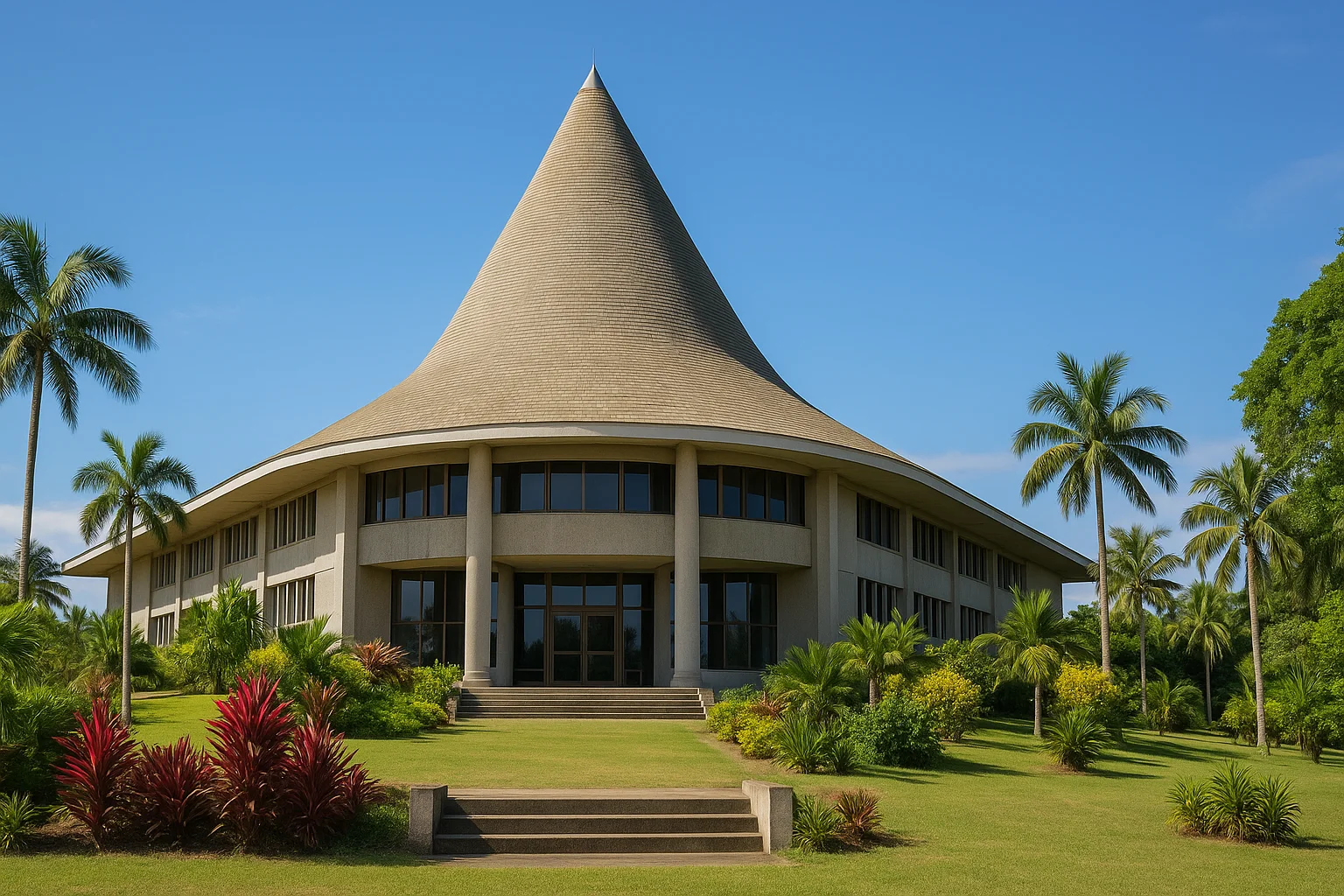
Electoral Process General elections happen every four years to fill Parliament's 52 seats. The country uses a single non-transferable vote system across 18 multi-member constituencies. In this system, each voter gets one vote for one candidate, even if their district elects multiple representatives. The candidates with the most votes win. This can result in MPs being elected with a surprisingly small share of the vote, sometimes with just over 10-15% support in a crowded field. The March 2020 general election saw a turnout of around 51 percent, a figure depressed by the COVID-19 pandemic and a severe tropical cyclone.
Political Pluralism Vanuatu has a vibrant, if chaotic, multi-party system. It’s not unusual for a dozen or more parties—plus independents—to win seats, making outright majorities almost impossible. Major parties include the Graon Mo Jastis Pati (GJP), the Union of Moderate Parties (UMP), and the Leaders Party of Vanuatu (LPV). This fragmentation forces the creation of coalition governments, which are often fragile alliances susceptible to collapse from party-switching and motions of no confidence. For more details, see our article about Vanuatu's democratic process.
Prime Ministerial Election After a general election, the real work begins. Newly elected MPs gather to elect a Prime Minister from among themselves in a process involving intense political negotiation and horse-trading. Following the 2020 election, where GJP won nine seats and UMP and LPV took five each, Bob Loughman of the Vanua'aku Pati was elected Prime Minister in April 2020. He had to secure the support of 31 of the 52 MPs, a clear demonstration of the need to build a broad—and often unwieldy—coalition to govern.
What Are the Key Functions of Government and Recent Challenges?
The Government of Vanuatu is responsible for making policy, running the country, and upholding the law. But it struggles with persistent challenges: political instability, corruption, and the constant threat of natural disasters that strain its capacity and resources.
Functioning of Government Day-to-day government work is done by the Council of Ministers, led by the Prime Minister. This cabinet sets national policy and oversees the ministries. But the constant threat of no-confidence motions hangs over every administration, leading to a high turnover of governments. Charlot Salwai's 2016–2020 term was a remarkable exception—the first government since 1995 to serve a full four years. This underlying instability makes long-term planning and policy implementation incredibly difficult.
Rule of Law While constitutionally independent, the judiciary faces its own hurdles. Resource limitations and case backlogs can delay justice for years. Outside the main cities, customary law, or kastom, is a vital part of the legal fabric. Local chiefs command great respect and resolve many disputes based on tradition, not statute. This dual system works, but it can create confusion over legal jurisdiction and how laws are enforced.
State of Emergency (SOE) Powers The government can declare a state of emergency to manage national crises, a power it has used for both natural disasters and public health threats. For example, after Tropical Cyclone Harold and during the COVID-19 pandemic, a state of emergency was declared to commence on 11 July 2020 and had been previously extended for 30 days starting on 11 June 2020. These declarations, like the "Instrument of Directions to Government Agencies relating to COVID-19," grant the government sweeping powers to manage a crisis, often with little oversight.
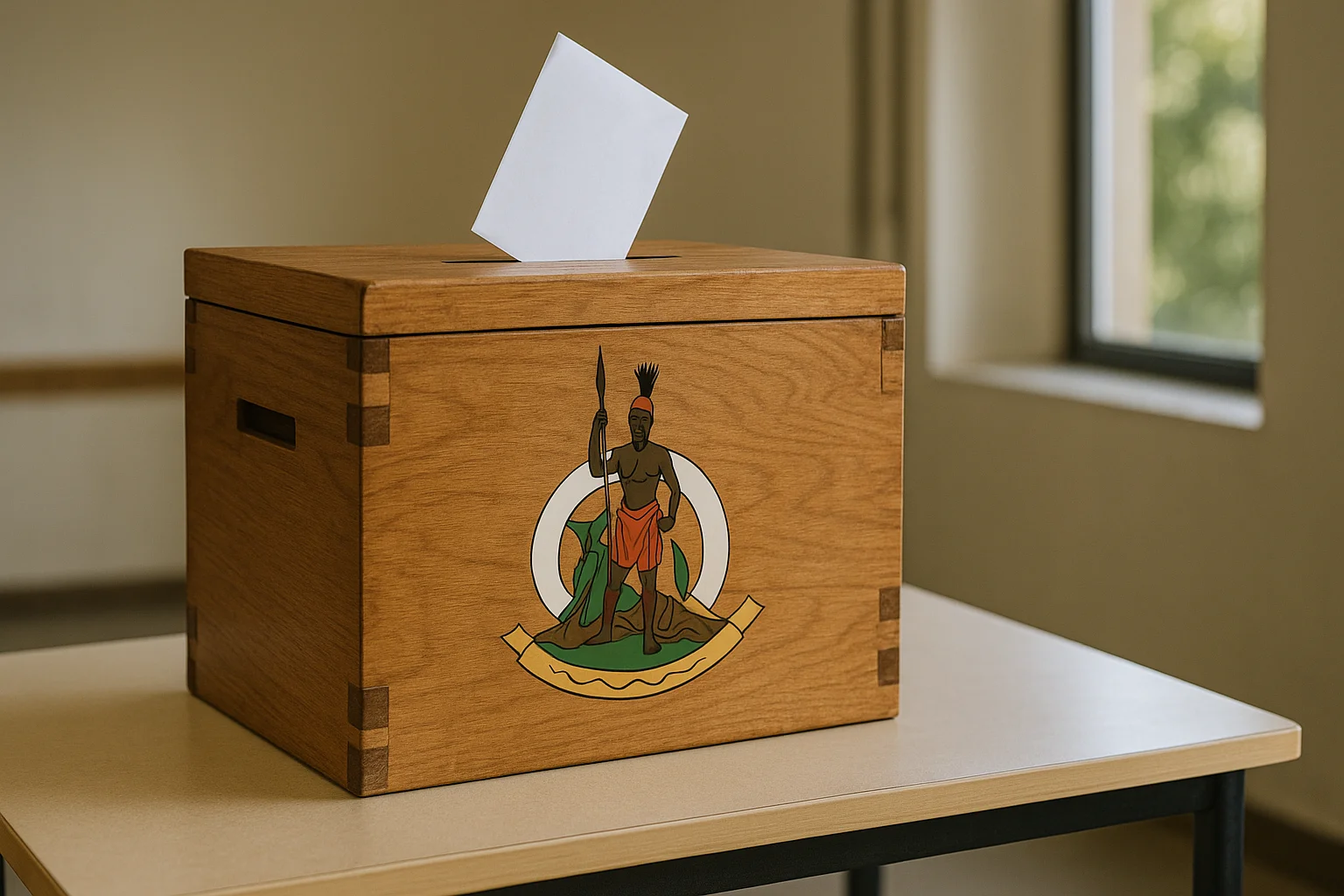
Corruption Corruption is a significant and publicly acknowledged problem in Vanuatu. It hurts public service delivery and erodes trust in government. Despite some high-profile prosecutions of politicians, successive governments have failed to implement and enforce strong, effective anti-corruption measures.
How Does the Vanuatu Government Interact with Other Nations?
Vanuatu’s foreign policy is active and focused. It punches above its weight on climate change advocacy, champions regional cooperation in the Pacific, and manages complex economic relationships with global powers. Its diplomatic stance is powerfully shaped by its reality as a small island developing state.
Foreign Policy Vanuatu is a member of the United Nations, the Commonwealth of Nations, the Pacific Islands Forum, and the Non-Aligned Movement. On the world stage, it is a fierce advocate for aggressive action on climate change—an existential threat to the low-lying archipelago. It also plays a pivotal role in promoting Melanesian solidarity and regional security.
INTERPOL Membership In 2018, Vanuatu became a member country of INTERPOL following Resolution No. 9 at the 87th General Assembly. Under Articles 4 and 32 of the INTERPOL Constitution, Vanuatu was required to establish a National Central Bureau (NCB). This bureau serves as the single contact point for international police investigations, giving local law enforcement access to INTERPOL's global databases and a direct line to police in 196 other member countries.
Citizenship by Investment (CBI) Program The CBI program, also called the Development Support Programme (DSP), has become a massive source of government revenue. At the same time, it has created serious friction with international partners over security concerns about the applicant vetting process.
EU Relations and Visa Issues Those concerns led the European Union to suspend its visa-waiver agreement with Vanuatu. Commission Delegated Regulation (EU) 2024/2059 extended the temporary visa suspension from 4 August 2024 to 3 February 2025. Shortly after, the EU made the change permanent, moving Vanuatu from its visa-free list (Annex II) to its visa-required list (Annex I). This was a direct, and painful, consequence of the EU's perception that the due diligence for CBI applicants was not strong enough. Vanuatu citizens now need a Schengen visa to travel to the bloc.

What is Vanuatu state department?
The term "Vanuatu state department" is an informal way of referring to the Ministry of Foreign Affairs, International Cooperation and External Trade. This ministry is the government body that formulates and carries out Vanuatu's foreign policy. It's responsible for managing the country's diplomatic missions—its embassies, high commissions, and consulates—and representing Vanuatu's interests in international forums.
What Should Travelers Know About Interacting with Vanuatu?
To ensure a safe and respectful trip, travelers should understand local laws, customs, and potential risks before they go. Entry rules have changed for some passport holders, and being aware of local conditions is essential.
Travel Advisories and Safety Vanuatu is generally a safe place for tourists. Still, it's wise to consult your home country's travel advisories before departure. Standard advice includes taking precautions against petty theft in urban areas like Port Vila, especially after dark. The country sits in a seismically active zone, making it prone to earthquakes, tsunamis, and cyclones, particularly during the wet season from November to April.
What to be careful of in Vanuatu?
Respect for local custom, or kastom, is everything. Dress modestly when visiting villages and always ask permission before taking photos of people. Watch your personal belongings. Health precautions are also key; protect yourself from mosquito-borne illnesses like dengue fever and drink only boiled or bottled water to avoid stomach problems. And if you're there during cyclone season, keep a close eye on local weather reports and follow all official instructions without delay.
Visa and Entry Requirements Your passport dictates your visa needs for Vanuatu. For many, a visitor visa is granted right on arrival. But rules change. It's crucial to check the latest regulations before booking your trip, especially given recent shifts. A major one? The EU's Schengen Area has suspended visa-free access for Vanuatu passport holders, a direct consequence for those who gained citizenship via investment programs. This means if you hold such a passport, you must now apply for a Schengen visa in advance—no more spontaneous trips to Paris or Rome. All travelers need a passport valid for at least six months past their planned departure date and proof of a flight out. This isn't a suggestion; it's a hard rule. Airlines will deny you boarding at your home airport if you don't meet this requirement, stopping your trip before it even starts. For any complex residency questions, getting professional advice is the smart move.
Do I need a visa for American Samoa?
No. American Samoa is a world away in terms of entry rules, separate from both the United States and Vanuatu. U.S. citizens and nationals can enter with just a passport. Almost everyone else, including Vanuatu citizens, must secure an entry permit before travel. Don't confuse this with a U.S. visa. The permit process is handled by the American Samoa Attorney General's Office, so you must deal with their specific forms and timelines, not a U.S. embassy.
This article is published by an independent law firm for informational purposes only and does not represent or claim affiliation with any government body, international organization, or official authority.
Questions
Frequently Asked Questions
The United Nations classifies Vanuatu as a Least Developed Country (LDC). Its economy relies heavily on small-scale agriculture and tourism, which leaves it exposed to shocks like cyclones or, as we've seen, global travel shutdowns. While incredibly rich in culture and stunning natural beauty, the nation grapples with significant economic and infrastructure development challenges.
That post is a revolving door. Due to the fluid nature of Vanuatu's coalition politics, the Minister of Foreign Affairs, International Cooperation and External Trade can change frequently. Marc Ati held the job in late 2023, but government reshuffles are a fact of life there. To get the correct, current name, your only reliable sources are the official Parliament of Vanuatu website or the government's own portal, which lists the latest cabinet.
This question mashes up a few different concepts. First, the U.S. Department of State issues "travel advisories," not "warnings," for all countries, including New Zealand (NZ) and Vanuatu. These inform American citizens of potential risks. At the same time, the New Zealand government posts its own travel advice for Kiwis on its SafeTravel website. Here’s the key takeaway: always check the travel advisories issued by your own government. They are tailored to you. Our general article on travel advisories explains this system in greater detail.
Tonga is a sovereign kingdom with its own unique entry rules, completely separate from Vanuatu's. For most visitors, a visa is issued on arrival for a limited time, as long as you have a valid passport, a confirmed flight out, and enough money for your stay. But rules can and do change without much notice. Before you go, you absolutely must verify the current requirements with the Tongan Ministry of Foreign Affairs or the closest Tongan embassy or consulate. { "@context": "https://schema.org", "@graph": [ { "@type": "Article", "headline": "How Does the Vanuatu Government Operate?", "datePublis
Contact Us
Schedule Your Free Case Evaluation Today
Share the details of your situation with our team, and we'll provide a prompt, confidential response. We're here to listen, answer your questions, and help you understand your legal options.
Send Us a Message
Reach Us Directly
All consultations are strictly confidential and protected by legal professional privilege.