How Names and Data Are Recorded
Name order and transliteration cause more delays than any other data question. How the entry is formed.
Passport name transliteration is how a name from a non-Latin script—like Cyrillic, Arabic, or Chinese—gets converted into the Latin alphabet for your official travel documents. Simple, right? Not quite. This conversion is governed by strict rules from His Majesty's Passport Office (HMPO), which can cause the spelling on your passport to clash with your other documents. This article breaks down the UK's procedures for these spellings and, more importantly, how to fix discrepancies so your passport truly reflects who you are.
Why Does the Spelling of My Name on My Passport Differ?
The usual culprit for a name spelling mismatch is the government's standardised transliteration system. To ensure consistency, HM Passport Office (HMPO) defaults to a method based on international conventions, mainly from the International Civil Aviation Organization (ICAO). This isn't personal; it's a technical process designed to make the name in your passport's machine-readable zone work anywhere in the world.
Here's the problem: this standard spelling often doesn't match the one you use every day. HMPO caseworkers are trained to apply the standard transliteration, sometimes adding a note about your original spelling but not always telling you before they print the passport.
You need to know which battle you're fighting. There are two very different scenarios:
- Transliteration Variance: You have one legal name. You just want it spelled differently from the ICAO standard (for example, preferring 'Yuliya' over the default 'Iuliia').
- Legal Name Change: Your name has officially changed, maybe through marriage, civil partnership, or a deed poll, and the passport must be updated to show this completely new name.
How Do I Request a Specific Name Transliteration on My UK Passport?
There isn't a special "transliteration request" form. Instead, you make your case within a standard UK passport application, which you can do online or with a paper form. During the application, you have to provide solid evidence to justify the spelling you want. A simple statement of preference won't cut it.
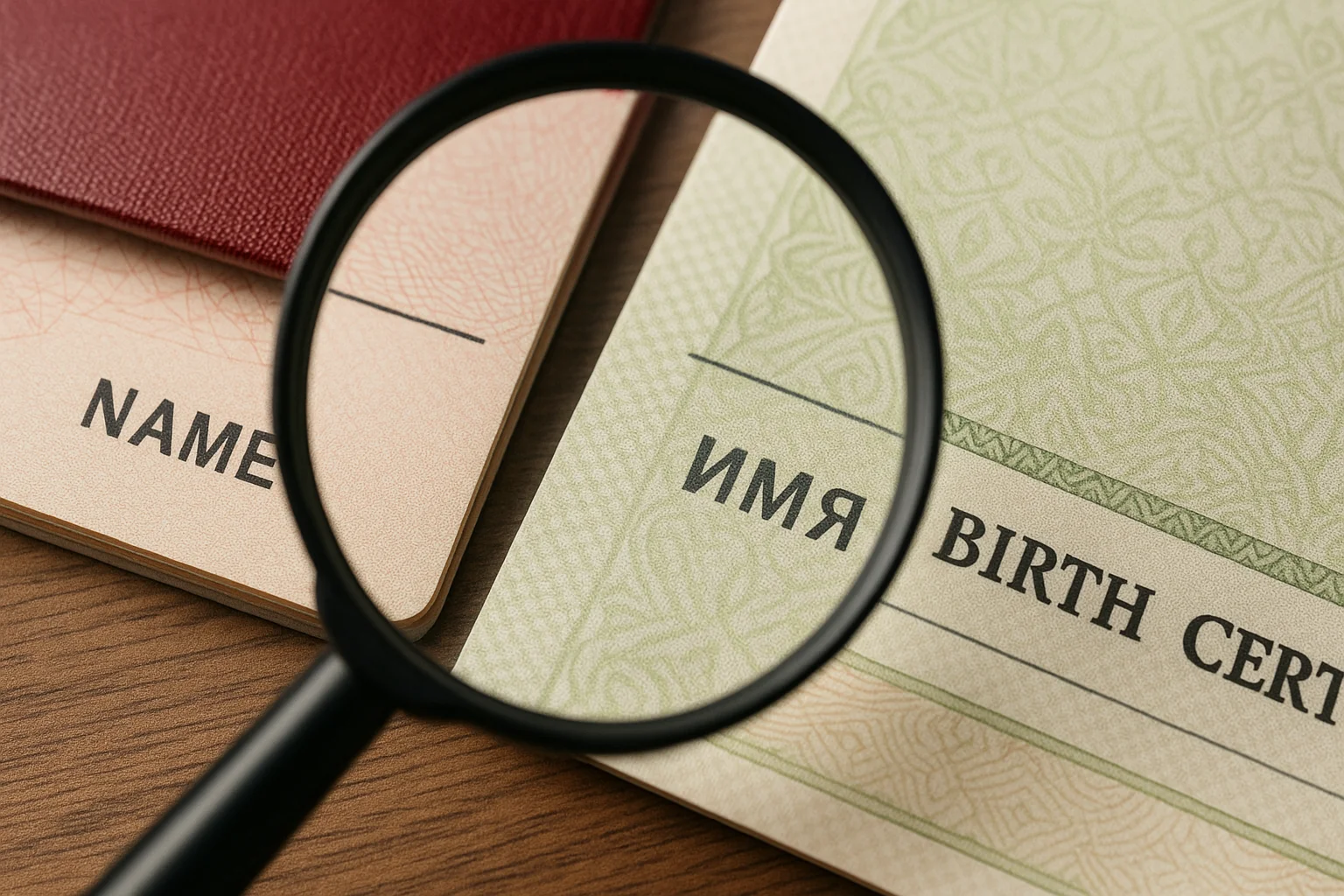
To back up your request, HMPO demands official documents. The proof must show your desired spelling is already recognised in an official capacity. Acceptable evidence can include:
- An official document from your name's country of origin that clearly shows the transliteration you want.
- A formal letter from that country's embassy or high commission in the UK, explicitly confirming the spelling.
- Your valid, unexpired passport from another country that already uses your preferred spelling.
Without this kind of official backing, HMPO will almost certainly fall back to its standard ICAO-based transliteration.
What if my name uses Cyrillic script?
For names from Cyrillic scripts like Russian or Ukrainian, HMPO has specific rules. If you provide a foreign passport with a different transliteration (perhaps for a patronymic), caseworkers will still use the ICAO version for the main passport page. But there's a valuable compromise. They can add your preferred spelling as an official "observation" on a separate page. This note is a crucial tool that officially links the two spellings, helping you avoid confusion at border crossings.
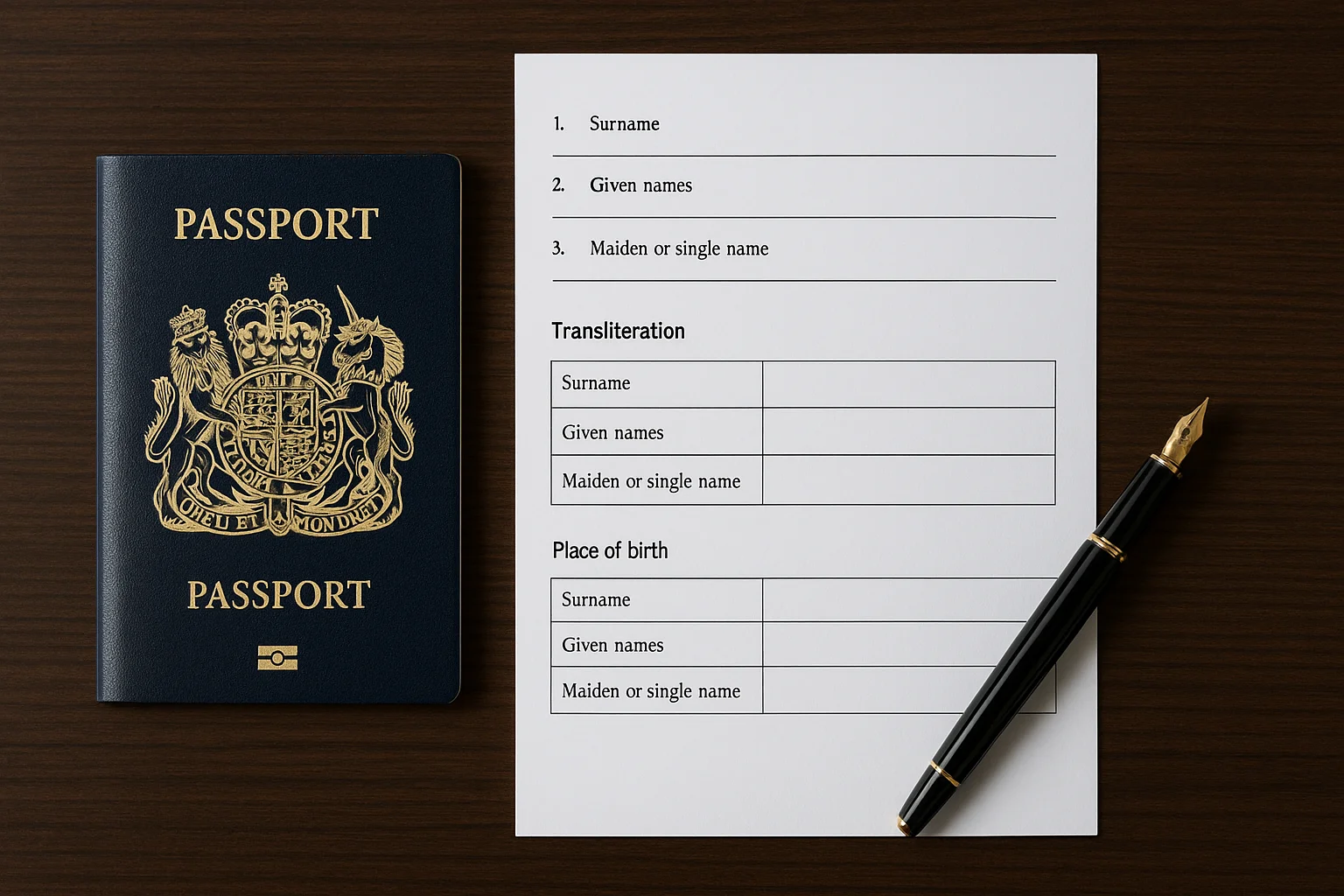
What if I Legally Changed My Name?
This is a completely different process from a transliteration request. A legal name change—from marriage or a deed poll—comes with much stricter evidence requirements.
To get your passport updated with a new legal name, you must provide the primary document that proves the change occurred. This could be a:
- Marriage or civil partnership certificate
- Deed Poll
- Statutory Declaration
- Naturalisation or registration certificate showing the new name
But that's not all. You must also prove the new name is in regular use. This is called the "use and repute" requirement, and it trips up many applicants. HMPO wants to see that your new name is used for everything official. Evidence should be recent (from the last year) and can include bank statements, utility bills, payslips, or council tax letters. Failing to prove you're using the name consistently is a common reason for applications to be delayed or even rejected, forcing you to start over.
What are the Possible Outcomes and Common Problems?
After reviewing your application, HM Passport Office might take one of several actions:
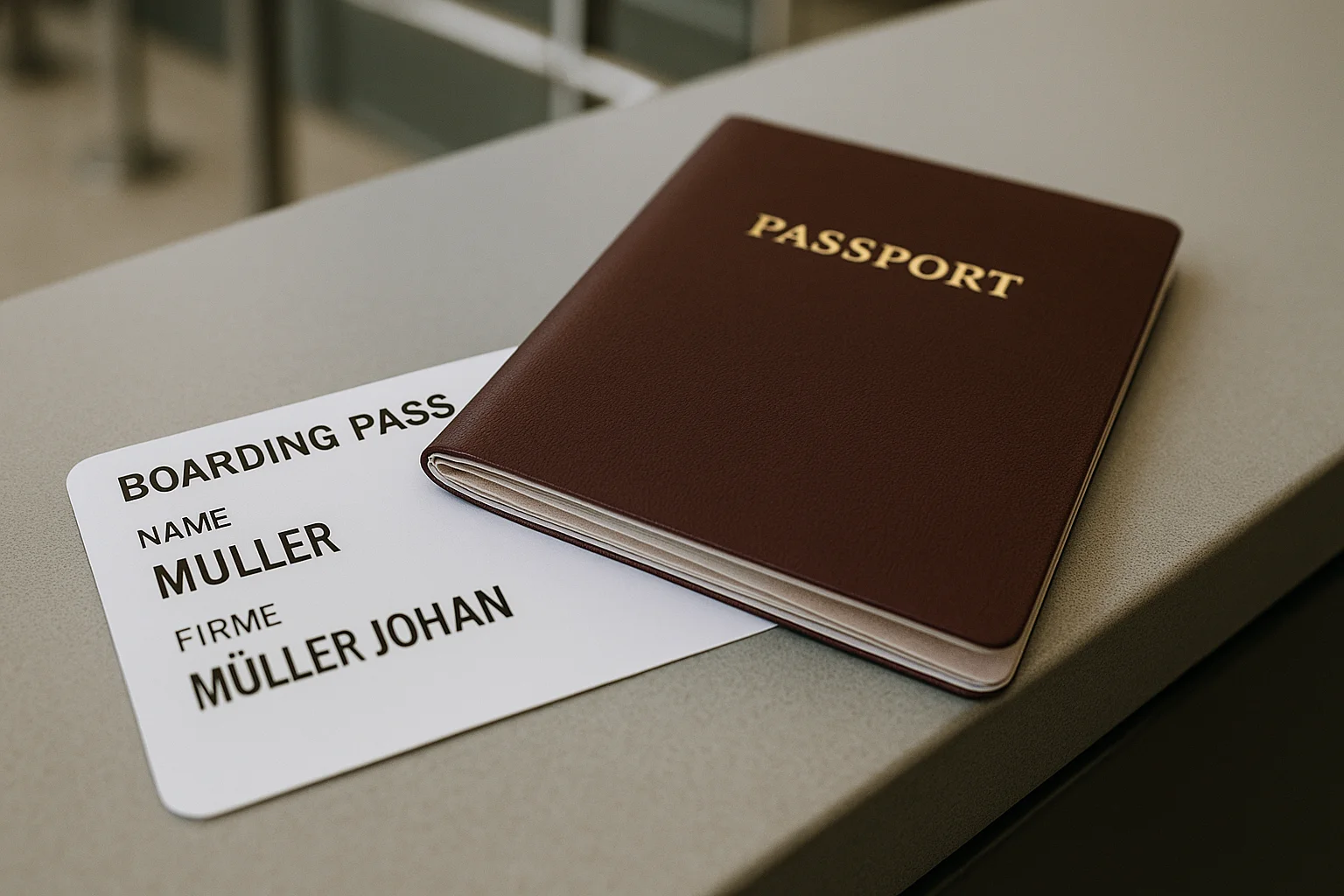
- They could issue the passport with your requested name spelling. Success.
- The passport could be issued with the standard transliteration, but with your preferred spelling added as an official observation.
- You might get a passport using only the standard transliteration, with your request denied.
- HMPO could pause the process and request further evidence to support your claim.
- Your request for a non-standard spelling may be outright refused if the evidence isn't strong enough.
The most common pitfalls are asking for a preferred spelling without official proof, failing to show a clear paper trail from an old name to a new one, and not demonstrating consistent, real-world use of a new legal name.
Don't expect a quick turnaround. There are no statutory deadlines for decisions on transliteration, and the timeline depends entirely on your case's complexity. Plan for this uncertainty. The cost is the standard passport application fee, plus any extra money you spend on supporting documents like embassy letters, certified translations, or a deed poll.
This article is published by an independent law firm for informational purposes only and does not represent or claim affiliation with any government body, international organization, or official authority.
Questions
Frequently Asked Questions
Yes. Your passport must show your full, legal name exactly as it appears on your primary supporting documents, like a birth, adoption, or naturalisation certificate. This covers all your first names and your surname.
If your name comes from a non-Latin script, the UK government uses a standard transliteration system to spell it in Latin characters. If you want a different spelling, you have to prove it's officially recognised. You'll need to provide documentation, like a letter from your country of origin's embassy, that confirms and supports the spelling you're asking for.
You can often travel with a passport in your maiden name, but you should absolutely carry your marriage certificate as proof of the name change. That said, HM Passport Office strongly advises that the name on your passport match the name you use everywhere else to avoid any issues with immigration. If you don't update it now, you will be required to when you next renew your passport.
Understanding document formats is key, because using the wrong one can invalidate an application. A Russian internal passport (for use inside Russia) has a 10-digit number made of a 4-digit series and a 6-digit number. The international passport (заграничный паспорт), which is what you use for travel abroad, has a 9-digit number. Always double-check you're providing the correct number from the correct document. { "@context": "https://schema.org", "@graph": [ { "@type": "Article", "headline": "What is Passport Name Transliteration and How Does it Work?", "datePublished": "2026-01-01", "dateModi
Contact Us
Schedule Your Free Case Evaluation Today
Share the details of your situation with our team, and we'll provide a prompt, confidential response. We're here to listen, answer your questions, and help you understand your legal options.
Send Us a Message
Reach Us Directly
All consultations are strictly confidential and protected by legal professional privilege.